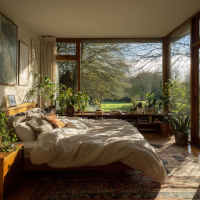
The way a home feels is not defined only by its layout or furnishings — light, windows, and views of nature play a powerful role in shaping perception. These elements influence not just aesthetics, but also mood, spatial awareness, and the overall experience of living in a space.
Natural Light as a Core Design Element
Natural light transforms interiors in ways that artificial lighting cannot fully replicate. It changes throughout the day, creating subtle shifts in atmosphere that make a space feel dynamic and alive. Rooms filled with daylight often appear more open, inviting, and comfortable. Light also enhances colors, highlights textures, and reduces the sense of confinement, making even smaller spaces feel more expansive.
Windows as Connectors Between Inside and Outside
Windows are more than functional openings — they act as visual and psychological connections to the outside world. Large or strategically placed windows frame views, direct attention, and influence how a space is experienced. They allow residents to feel connected to their surroundings while remaining indoors, creating a balance between privacy and openness.
Views of Nature and Their Emotional Impact
Seeing greenery, trees, or natural landscapes from inside a home has a calming effect. Nature introduces organic patterns and colors that contrast with built environments, helping to reduce visual fatigue. Even a small view of a garden, courtyard, or nearby park can create a sense of tranquility and balance, subtly improving daily well-being.
Perception of Space and Scale
Light and windows significantly affect how large or small a home feels. Well-lit spaces with open sightlines tend to feel more generous and breathable, while darker, enclosed rooms may feel more compact. The placement of windows can guide the eye outward, visually extending the boundaries of a room beyond its physical walls.
Orientation and Time of Day
The direction a home faces influences how sunlight enters at different times. Morning light can energize a space, while afternoon and evening light often create a warmer, more relaxed ambiance. This natural rhythm helps align the home with daily routines, making the environment feel more intuitive and comfortable.
In Conclusion
Light, windows, and access to nature are fundamental elements that shape how a home is perceived and experienced. They affect not only the visual qualities of a space but also its emotional tone and livability. When thoughtfully integrated, these elements can make a home feel brighter, more spacious, and more connected — turning everyday living into a more balanced and pleasant experience.