A Home as a Reflection of Your Personality: What Minimalists, Collectors, and Large Families Choose
Monday Apr 06th, 2026
A home is more than a physical space — it’s a reflection of how we live, what we value, and how we see the world. From carefully curated interiors to vibrant, lived-in environments, different lifestyles shape homes in distinct ways. Minimalists, collectors, and large families all approach their spaces with different priorities, yet each creates a unique sense of identity through their choices.
Minimalists: Clarity, Space, and Intentional Living
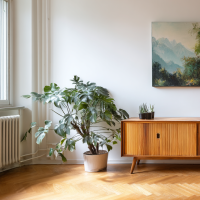
Minimalists focus on simplicity and purpose. Their homes are often defined by clean lines, neutral palettes, and a deliberate absence of excess. Every object has a reason to be there, whether functional or deeply meaningful.
For minimalists, a home is:
- uncluttered and visually calm,
- easy to maintain,
- centered around quality rather than quantity.
Storage is often hidden, furniture is carefully selected, and open space is treated as a valuable element rather than something to be filled. The result is an environment that supports focus, clarity, and mental ease.
Collectors: Expression, Story, and Personal Identity
Collectors, on the other hand, see their homes as a canvas for self-expression. Their spaces are often filled with objects that carry stories, memories, or aesthetic value. Books, art, vintage finds, travel souvenirs — each item contributes to a narrative.
A collector’s home is typically:
- rich in visual detail,
- layered and expressive,
- deeply personal.
Instead of minimalism, there is intentional abundance. Display shelves, curated arrangements, and themed corners transform the home into something closer to a living archive. The space reflects curiosity, passion, and a desire to surround oneself with meaningful objects.
Large Families: Functionality, Flexibility, and Shared Living
For large families, a home must first and foremost support daily life. Functionality becomes the guiding principle, as the space needs to accommodate multiple routines, schedules, and personalities.
Such homes often emphasize:
- durable and practical materials,
- efficient storage solutions,
- flexible shared spaces.
Open-plan layouts, multiple storage zones, and multi-purpose rooms help maintain order while allowing everyone to coexist comfortably. Personal touches still matter, but they are balanced with practicality and accessibility. The home becomes a hub of activity, connection, and coordination.
Different Lifestyles, One Core Idea
While these three approaches differ in appearance and priorities, they share a common foundation: the home is shaped by the people who live in it. Whether it’s the quiet restraint of minimalism, the layered richness of a collector’s space, or the structured livability of a family home, each environment tells a story.
In Conclusion
A home is never just about design trends or furniture choices. It evolves as an extension of personality, habits, and values. By observing how people choose to organize and inhabit their spaces, it becomes clear that the most meaningful homes are not the ones that follow a single formula, but the ones that authentically reflect the lives within them.