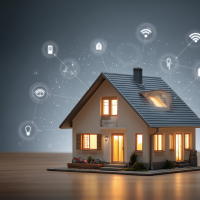
Smart home technology has become a standard feature in modern listings, but not all “smart” upgrades carry equal weight in the eyes of buyers. While some features are impressive in marketing photos, only a specific subset tends to meaningfully influence purchasing decisions or perceived value.
One of the most consistently valued categories is security-related technology. Smart locks, video doorbells, and integrated security systems are highly attractive because they offer both convenience and peace of mind. Buyers appreciate the ability to control access remotely, monitor deliveries, and receive real-time alerts, especially in urban condominium environments or detached homes with multiple entry points.
Climate control systems also rank highly in practical value. Smart thermostats, such as those that learn usage patterns or allow remote temperature adjustments, are often seen as cost-saving and energy-efficient. Buyers tend to view these systems as functional rather than luxury features because they directly impact monthly utility expenses and comfort levels throughout seasonal changes.
Lighting automation is another feature that adds moderate appeal, particularly when it is simple and well-integrated. Systems that allow dimming, scheduling, or voice control can enhance daily living convenience. However, overly complex lighting setups or fragmented app ecosystems can sometimes have the opposite effect, creating frustration rather than perceived value.
Integration quality matters more than the number of devices. Buyers increasingly prefer ecosystems that work seamlessly together rather than homes filled with disconnected gadgets. A unified platform—where lighting, security, heating, and entertainment systems can be controlled through a single app or interface—tends to be far more attractive than multiple standalone systems requiring separate management.
Interestingly, entertainment-focused smart features such as built-in speakers or automated home theater systems are less influential in purchase decisions than many sellers assume. While they can enhance lifestyle appeal during showings, they are rarely a primary factor in pricing decisions unless the property is positioned in a luxury segment.
Voice assistants and general automation hubs have also become normalized rather than premium. Features like voice-controlled lighting or basic automation are now widely expected in newer developments, meaning they no longer provide strong differentiation unless implemented at a high level of sophistication.
On the other hand, overly customized or overly technical systems can sometimes reduce buyer interest. If a smart home setup appears complicated, difficult to maintain, or dependent on niche platforms, buyers may factor in future replacement or simplification costs, which can reduce perceived value.
Another important consideration is reliability. Buyers care less about how advanced a system is and more about whether it works consistently without frequent troubleshooting. Simplicity, stability, and ease of use often outweigh technical sophistication in real-world decision-making.
Ultimately, the smart home features that matter most are those that enhance security, reduce ongoing costs, and simplify daily living. Technology that integrates seamlessly into everyday routines tends to add value, while complex or novelty-driven systems often have limited impact on final purchase decisions.